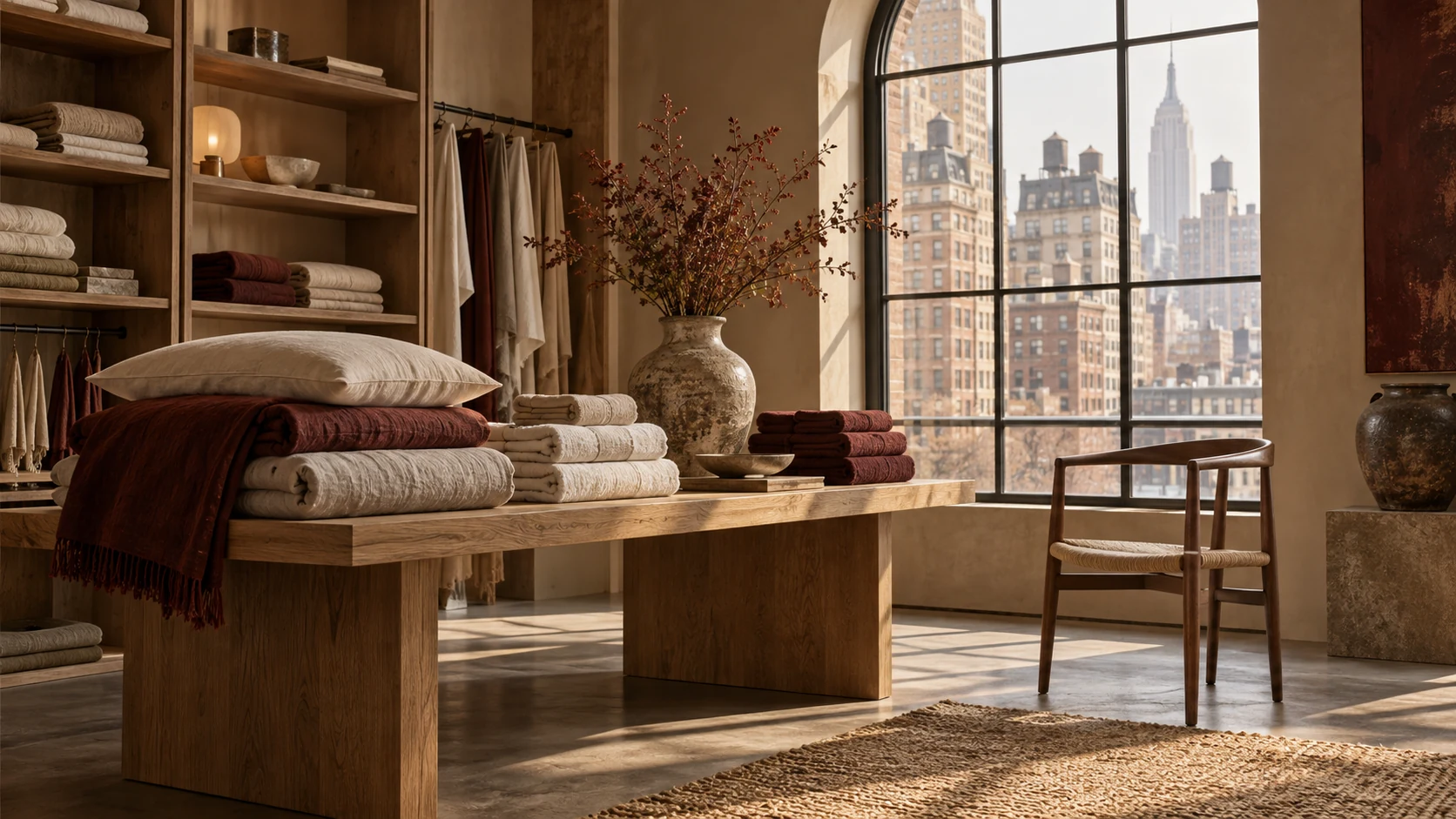
Sooner or later, every European home brand looking at the US asks the same question: should we take a showroom in New York? It feels like the serious move. A permanent address on Fifth Avenue, a room to host buyers, a line on the website that says New York. Sometimes it is the right call. But a showroom and a sales operation are two different things, and brands that confuse them end up paying Manhattan rent for a room that stays quiet between market weeks.
Start with what a showroom actually buys. Twice a year, usually in March and September, national buyers come to the city for the New York Home Textiles Market, often called Home Fashions Market. There is no convention center and no single organizer. The market happens across permanent and temporary showrooms in buildings such as 230, 261 and 295 Fifth Avenue, and buyers plan their visits with the Market Map published by the Home Fashion Products Association. A showroom puts you on that map.
It also buys legitimacy. To an American buyer, a permanent New York address says you plan to stay, that the product can be seen and touched without a flight to Europe, and that someone local will pick up the phone. For bedding, towels, rugs and upholstery fabrics, touch matters. Buyers want to feel the hand of a textile before they commit to an order.
Now the part that gets left out of the pitch deck. The association's own market FAQ is blunt about who fills the rooms: manufacturers and importers make sure buyers attend, and retailers book appointments with the vendors they want to see. The building does not bring you buyers. You do. A showroom with nobody booking appointments in the weeks before market is an expensive place to store samples.
A showroom also does not sell between markets. After the visit comes the real work: samples, pricing, lead times, an answer to the question the buyer asked on Thursday. Reorders need someone who notices when sell-through slows. New accounts need vendor setup and products that meet US rules. Under FTC rules, most household textiles sold in the US must be labeled with fiber content, country of origin and the business responsible for the product. None of this happens because a room exists.
This is where a sales agent comes in. An independent rep does the active part: prospecting, appointments, follow-up, orders. Reps usually work on commission, so the cost follows results. MANA, the US manufacturers' agents association, reports typical commissions of 5 to 9 percent on sales to distributors and retailers. The tradeoff is attention. A good rep carries several lines and sells what moves easily, and a new European brand with unfamiliar pricing and long lead times is rarely the easiest line in the bag. Multi-line showrooms combine a shared space with a sales team, but the same question applies: how much of their week is yours?
If you do sign a rep, put it in writing. In New York State, a contract with a sales representative who solicits wholesale orders must be written and must set out how commissions are calculated and paid. When the contract ends, earned commissions are due within five business days, and a principal who pays late can owe double damages. A handshake deal is not an option.
So which one? It depends on the channel. If your buyers are national retailers who shop Market Week, a well-booked presence during market, even a temporary suite, can be worth more than a year-round lease. If you sell to interior designers and the trade, a place in a design building or a strong multi-line showroom may matter more. Either way, the showroom is the stage. Someone still has to arrange the meetings and follow up. That is where a dedicated desk can help: research, outreach preparation, introductions, meeting preparation, reporting and follow-up.
Aegis Club is based in New York and covers the entire USA. For European home and lifestyle brands, we build the market-entry plan before the lease is signed: which buyers, which channel, which cities, and what support is needed before committing to a showroom or sales agent.
Sources: Home Fashion Products Association, Market Week FAQs; HFPA, NY Market Map; FTC, Threading Your Way Through the Labeling Requirements Under the Textile and Wool Acts; MANA, Create Fair and Balanced Written Agreements; New York Labor Law §191-b and §191-c