Two numbers from the past week point in different directions.
LVMH reported that its fashion and leather goods division, the one that holds Louis Vuitton and Dior, fell 5 percent in the third quarter, dragged down by China [1]. And the US Commerce Department reported that furniture and home furnishings stores sold an estimated $10.7 billion in September, 4.9 percent more than a year earlier [2][3].
They are not opposites. They are two parts of the same American shopper.
Start with luxury. Bain and Altagamma expect personal luxury goods to grow 2 to 4 percent this year after a small dip in 2025, and they describe the US as the bright spot: American-native brands grew roughly 10 to 15 percent in the first quarter, and upper middle-class households are raising their luxury spending about twice as fast as wealthier ones [4]. At the same time, the study notes that US inflation hit its highest level since April 2023 and consumer confidence reached a record low earlier this year [4]. The reset is real, but it is not a retreat. It is a sorting.
Reuters heard the same thing from Inditex, the owner of Zara. After price rises across fashion, middle-income shoppers who once bought a luxury handbag may now buy from Zara or Massimo Dutti instead. "Many customers are mixing different kinds of products in their wardrobe," its chief executive said [5].
Now the home. September was a strong month, but it is one month. For the year to date, furniture and home furnishings sales are about 1.5 percent below last year's pace, and the Census figures are not adjusted for price changes [2][3]. Total US retail was up 6.3 percent in September [3]. Home is holding up. It is not leading.
No source here says luxury money is moving into homes. What the numbers do show is a buyer who is still spending, who is choosing more carefully, and who mixes price levels in the same basket.
That shapes the weeks ahead in New York. BDNY returns to the Javits Center on November 8 and 9, connecting boutique hospitality brands and designers with vendors and products [6]. It is a place where spaces, and the objects that furnish them, get specified.
For a European brand in home, design or materials, the signal from the past week is the same: American buyers are open, and they want a reason.
That reason is rarely a name. It is price against quality, delivery against promise, and someone local who follows up after the show.
Sources
- 1. LVMH Group Q3 2026 earnings: fashion unit sales fall 5 percent, WWD
- 2. Furniture sales up sharply in September, says DOC ($10.696B adjusted, +4.9% year on year; year to date -1.5%), Furniture Today, Oct 15, 2026
- 3. Advance Monthly Sales for Retail and Food Services, September 2026 (total +6.3%, not adjusted for price changes), US Census Bureau, Oct 15, 2026
- 4. Global luxury stabilizes amid compounding disruptions, Bain & Company and Altagamma, Jun 25, 2026
- 5. Inditex bets on the US for its next phase of growth (Reuters, via MarketScreener), Sep 11, 2026
- 6. BDNY, November 8-9, 2026, Jacob K. Javits Center
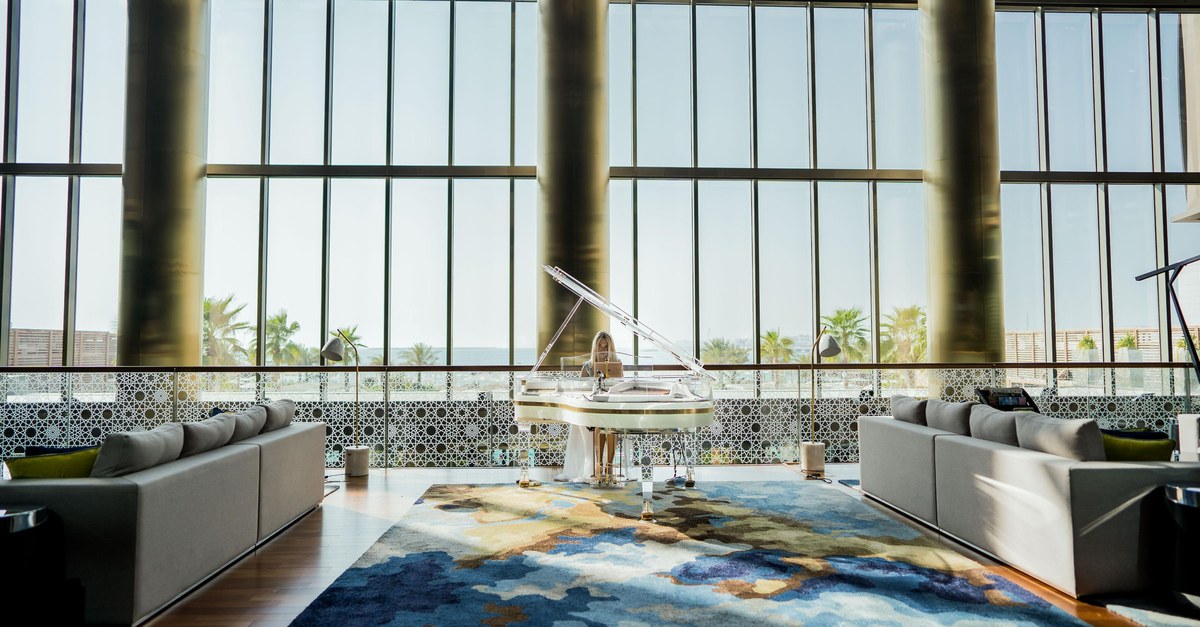
A hotel lobby with a glass wall. Photo by Kadir Avşar from Pexels.